Table of Contents
- The Short Answer: Historical Thrillers Mix Fact and Fiction
- How Historical Fiction Based on True Events Works
- Historical Fiction vs. True Story: Where the Line Gets Blurry
- What Authors Change and Why: Creative License in Historical Thrillers
- How to Evaluate Historical Fiction Accuracy
- How Authors Signal What’s Real and What’s Invented
- Why Thriller Conventions Push Authors Away from Pure Fact
- Frequently Asked Questions
Last Updated: October 10, 2026
The Short Answer: Historical Thrillers Mix Fact and Fiction
Are historical thrillers based on facts? Yes and no. They root themselves in real historical events, authentic time periods, and sometimes actual people, but also weave in invented scenes, fictional characters, and dramatic twists that never happened. At Jeffrey Poston Books, we understand that readers wonder where the line between fact and imagination falls in historical thrillers, and that uncertainty is part of what makes these stories compelling.
Historical thrillers blend documented history with creative storytelling. A novel might be set during a real war with actual historical figures, yet the protagonist could be entirely fictional, the climactic confrontation invented, and the timeline compressed for dramatic effect.
Historical thrillers are not documentaries dressed up as fiction, they’re stories that use history as a foundation but build their own architecture on top of it.
How Historical Fiction Based on True Events Works
Historical fiction based on true events starts with research. Authors dig into primary sources, historical accounts, and period details, what people wore, how they spoke, what technologies existed, to create authenticity.
Authors then choose what to keep and what to change: preserve major historical events while inventing characters, or keep real people but alter when events occurred. The goal is always the same: create a compelling narrative that feels true to its time period.
A historical thriller set during the American Civil War might feature real battles and actual generals, but the spy who infiltrates enemy lines could be entirely fictional. These invented elements make it a story rather than a history book.
Historical Fiction vs. True Story: Where the Line Gets Blurry
The boundary between historical fiction and a true story matters but is not always clear. A true story reports actual events with real people and documented facts. Historical fiction uses real settings and events but adds fictional elements, prioritizing an engaging story over historical reporting.
Some books blur this line intentionally, one might be 80 percent fact and 20 percent invention, another the reverse. Readers often struggle to know which parts are real, especially when the author doesn’t explicitly signal the difference.
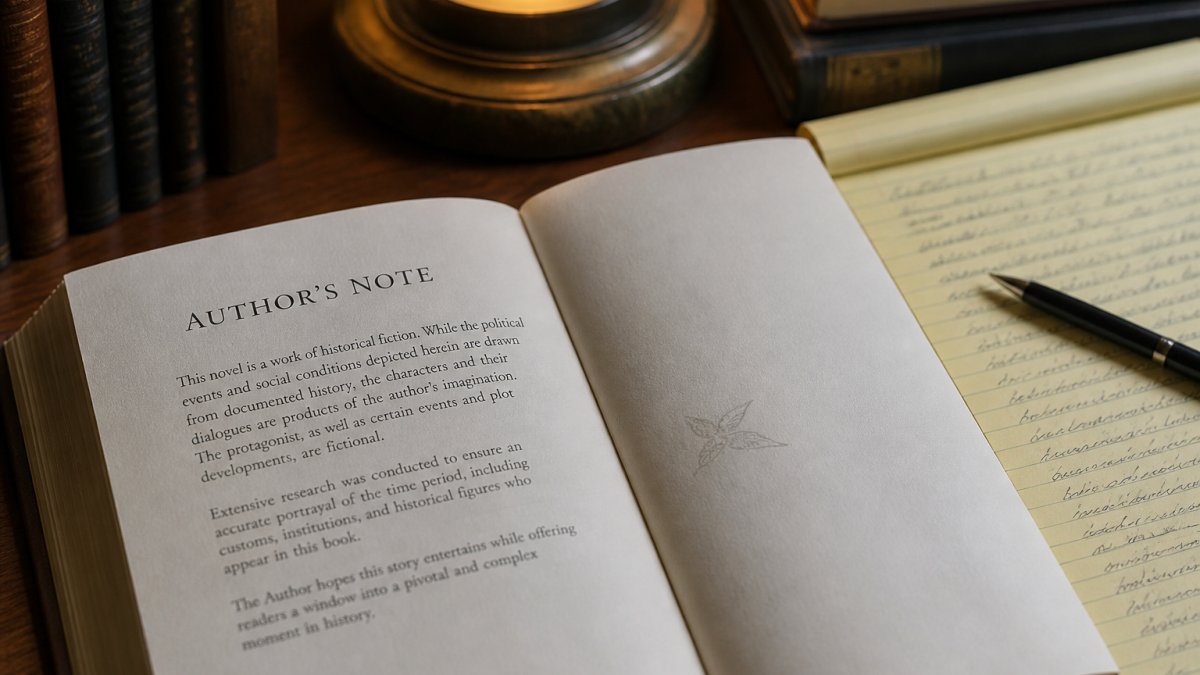
Author’s notes matter because they let readers make informed decisions about what to believe. Without them, readers might assume invented details are historically accurate, where confusion and misinformation take root.
What Authors Change and Why: Creative License in Historical Thrillers
Authors use creative license in historical thrillers for specific reasons, many driven by thriller conventions rather than historical research. Understanding these changes helps readers recognize where fact ends and narrative invention begins.
Timeline Compression and Invented Scenes
Timelines in historical thrillers rarely match reality. Wars drag on for years; political negotiations span decades. Thrillers cannot sustain tension across such timeframes, so authors compress events. A conflict lasting three years becomes three weeks; minor skirmishes combine into one dramatic battle.
This compression is a core thriller device. By collapsing months or years into days, authors create escalating urgency. Readers may believe events unfolded rapidly when the actual historical record shows they took much longer.
Invented scenes serve emotional truth rather than factual accuracy. An author might create a conversation between two historical figures that never occurred but captures the tension and stakes of their real relationship. These invented scenes often include unrecorded dialogue, secret meetings that left no historical trace, or private moments no contemporary source documents.
Thriller-Specific Devices That Alter Historical Fact
Beyond timeline compression, thrillers employ narrative devices that systematically depart from documented history:
Invented clues and false leads. Thrillers depend on mystery and misdirection. An author might invent clues pointing toward a false suspect or create evidence that does not appear in historical records. These invented details serve the plot but can mislead readers about what actually happened.
Secret plots and hidden conspiracies. Thrillers thrive on hidden agendas and covert operations. An author might invent a secret plot by a historical figure or create an entirely fictional conspiracy that intersects with real events. The invented plot feels plausible because it fits the historical setting, but it has no basis in documented fact.
Reconstructed dialogue and internal monologue. Historical records rarely capture private conversations or internal thoughts. Thriller authors fill these gaps with invented dialogue that feels authentic but is entirely imagined. Readers may assume it reflects what was actually said when it is the author’s interpretation or invention.
Compressed or invented investigations. Many historical thrillers feature investigations into real events. An author might invent the investigative process, discoveries, or the investigator. The real historical event is factual, but the path to understanding it is fictional.
Composite and Fictional Characters in Real Settings
Many historical thrillers feature composite characters, fictional people built from traits of several real historical figures. This approach allows authors to represent the experience of an entire group without being tied to any single person’s documented actions.
Fictional characters placed in real historical settings are even more common. These invented people navigate authentic events and meet real historical figures. This technique lets authors explore what ordinary people might have experienced during extraordinary times, though readers may conflate fictional experiences with actual ones, leading to misconceptions about history.
How to Evaluate Historical Fiction Accuracy
Readers can assess the accuracy of historical thrillers by using a practical fact-versus-fiction checklist. This approach helps distinguish between documented history and narrative invention without requiring a history degree.
The Fact-Versus-Fiction Checklist for Readers
Step 1: Check for an author’s note. This section explains what the author changed and why.
Step 2: Review the bibliography and source list. A solid bibliography shows the author researched the period. Look for primary sources (letters, diaries, government documents, newspapers) rather than only secondary sources (Types of Sources – Using the Library of Congress Online).
Get the Ebook set at a 67% discount →
Step 3: Identify real historical figures and events. Before reading, research the main figures and events using reliable sources such as the Library of Congress or academic databases. As you read, compare the book’s portrayal to what you verified.
Step 4: Distinguish between established facts and contested history. Some historical events are well-documented; others are disputed by scholars. If the book addresses a contested question, check whether the author acknowledges multiple interpretations.
Step 5: Flag invented or composite characters. The author’s note should identify which characters are real, fictional, or composite. If not provided, research main characters yourself. A quick search reveals whether a character appears in historical records.
Step 6: Verify climactic moments and turning points. Thrillers often diverge most from fact at their dramatic peaks. If the climax hinges on a specific historical event or discovery, verify it.
Step 7: Cross-check dialogue and private scenes. Historical records rarely capture private conversations or internal thoughts. If the book includes extensive dialogue between historical figures or detailed descriptions of their private moments, recognize that these are likely invented or reconstructed.
Examples of What to Look For
When reading a historical thriller set during a real war, ask: Did this battle actually happen? Yes, verify the date, location, and outcome. Did this character participate? Check historical records. Did this conversation occur? Probably not, private conversations are rarely documented. Did this secret plot exist? Research whether historians have evidence of it. If the plot is mentioned in the author’s note as invented, you know it is fiction. If it is presented without acknowledgment, verify it independently.
When reading a thriller centered on a real crime or mystery, ask: Is the crime real? Verify it. Is the investigation portrayed accurately? Probably not, the author may have invented the investigative steps, the evidence discovered, or the person investigating. Did the case resolve this way? Check the historical record. The real resolution might be different from the book’s ending.
When to Treat a Novel as History and When Not To
A historical thriller is not a history textbook, even when it is meticulously researched. Use it to spark interest in a period or event, then verify claims in reliable historical sources. If you encounter a fact in the novel that surprises you or seems important, look it up. Do not assume a detail is historically accurate simply because it appears in a published book or because the book is otherwise well-researched. Authors of historical thrillers prioritize storytelling. Historians prioritize evidence. These goals sometimes align and sometimes conflict.
How Authors Signal What’s Real and What’s Invented
Responsible authors use several techniques to signal the boundary between fact and fiction. The author’s note is the most direct approach. It explicitly states what’s real and what’s imagined. Some authors go further, noting specific changes they made and explaining why.
Bibliographies and source lists serve a similar function. They show readers where the author found information and what historical records informed the story. Readers who want to verify facts can consult the same sources.
Some authors include a historical timeline or context section at the end of the book. This material explains what events are real, when they occurred, and how the novel relates to documented history. It’s a courtesy to readers who want to distinguish fact from fiction.
Without these signals, readers must make assumptions. They might believe invented details are historically accurate. They might dismiss real events as fiction. Clear communication from the author prevents this confusion and builds trust with readers.
Why Thriller Conventions Push Authors Away from Pure Fact
Thriller conventions demand pacing, suspense, and dramatic payoffs. Pure historical fact rarely delivers these elements consistently. Real history is messier, slower, and less dramatically satisfying than fiction.
Thrillers need escalating tension. Each scene must raise the stakes or reveal new information. Real historical events don’t always follow this pattern. A genuine crisis might resolve anticlimactically, or a major event might unfold over months rather than days. Thriller authors compress, rearrange, and invent to maintain momentum.
Thrillers also need clear antagonists and protagonists with conflicting goals. Real history involves complex systems, competing interests, and ambiguous outcomes. Creating a thriller from pure fact requires simplifying these complexities. That simplification often means inventing or exaggerating conflicts.
Character arcs in thrillers follow specific patterns. Protagonists face obstacles, make discoveries, and ultimately triumph or fail in ways that feel narratively complete. Real people’s lives rarely follow these arcs. Fictional characters can be shaped to fit thriller conventions in ways historical figures cannot.
This tension between historical accuracy and thriller conventions is fundamental to the genre. Authors must choose how much to prioritize each. Some lean heavily toward fact. Others prioritize thrills and use history as a backdrop. Most find a balance somewhere in between.
Historical thrillers capture readers because they combine the allure of real events with the excitement of invented drama. But readers should approach them with clear eyes about what they’re reading. These books are stories inspired by history, not historical records.
Frequently Asked Questions
Does historical fiction have to be based on a true story?
No. Historical fiction must be set in a real historical period and often incorporates real events or people, but it does not require a true story as its foundation. Many historical thrillers begin with a ‘what if’ premise or fictional plot anchored in authentic historical settings and documented facts. The genre requires historical accuracy in verifiable details, not a true story framework.
How much of a historical thriller is usually factual?
This varies widely by author and book. Real historical events, dates, and figures often form the backbone, but scenes, dialogue, and character interactions are typically invented. Some authors maintain 80-90% factual accuracy while using creative license for dramatic tension; others prioritize narrative momentum over strict adherence to the historical record. Check the author’s note and bibliography to understand their research process and disclosures.
Can historical thrillers include fictional characters in real historical events?
Yes, and this is common. Fictional protagonists placed in authentic historical settings allow authors to explore real events through a narrative lens. Real historical figures may appear as secondary characters or antagonists, while invented characters drive the plot. This approach lets readers experience verifiable history while enjoying thriller pacing and invented plot twists that pure historical nonfiction cannot provide.
How can readers tell fact from fiction in a historical novel?
Check the author’s note for explicit disclosures about which events are real, which are fictionalized, and which are invented. Look for a bibliography listing primary and secondary sources, which signals research depth. Cross-reference major plot points and characters against historical records. Be skeptical of dialogue, it’s almost always invented, and understand that composite characters and timeline compression are standard thriller conventions, not factual inaccuracy.